The best time of day for a photoshoot in Spain
A month-by-month guide to golden hour, blue hour, and the best times to shoot outdoors in Barcelona, Madrid, Ibiza, and other Spanish cities.
Light is everything in a photoshoot. Thanks to its privileged latitude, Spain offers some of the most photogenic light in Europe: long golden hours in winter, deep blue skies in spring, and endless summer sunsets. This detailed guide tells you exactly when to book your session to get the warm, soft colors you see in the best professional photos, month by month and city by city.
What golden hour is and why it matters
Golden hour is the 60 minutes just after sunrise and the 60 minutes before sunset. The sun sits low on the horizon, light passes through more atmosphere and becomes warm, soft, and directional. Skin looks beautiful, shadows are long but not harsh, and colors gain depth. That is why practically every fashion magazine cover and wedding feature is shot in this window.
Golden hour is followed by blue hour: the 20-30 minutes after sunset when the sky keeps a deep blue and the city starts to switch on its lights. It is magnificent for urban photos and skylines, though for portraits of people you will need some artificial light.
If you remember only one thing from this article, let it be this: never book an outdoor session at midday in summer. The sun will be near vertical, will cast harsh shadows under eyes and nose, and will force everyone to squint. No matter how good the photographer is, no edit can fix poorly chosen light.
Golden hour times by month in Spain
In December and January, the sun sets around 17:45-18:00 in most of the country. Golden hour starts around 16:30. It is perfect: you can shoot without waking up at dawn and still get gorgeous warm, diagonal light. The only downside is that the day is short, so it is better to focus on a single location.
In February and March, the days grow longer quickly. Sunsets between 18:30 and 20:15. This is the best season of the year in terms of light: clean skies after winter, vegetation beginning to bloom, and still no summer tourist mass.
In April, May, and June, sunsets stretch to 21:30. The golden light in May in Mediterranean areas is some of the most photographed in the world. If you want that signature "honey" effect of Spanish wedding photos, this is the moment.
In July and August, the sun does not set until 21:30-22:00. Golden hour starts at 20:00, with the best light between 20:30 and 21:30. You will eat late if you want to use the light, but the photos are worth it. As a bonus, beaches empty out at that hour because everyone leaves for dinner.
September, October, and November are ideal months for photography: golden light falls between 18:00 and 19:30, the weather is good across most of the country, and tourist spots are not packed. It is the favorite season of many professional photographers.
Differences between Spanish cities
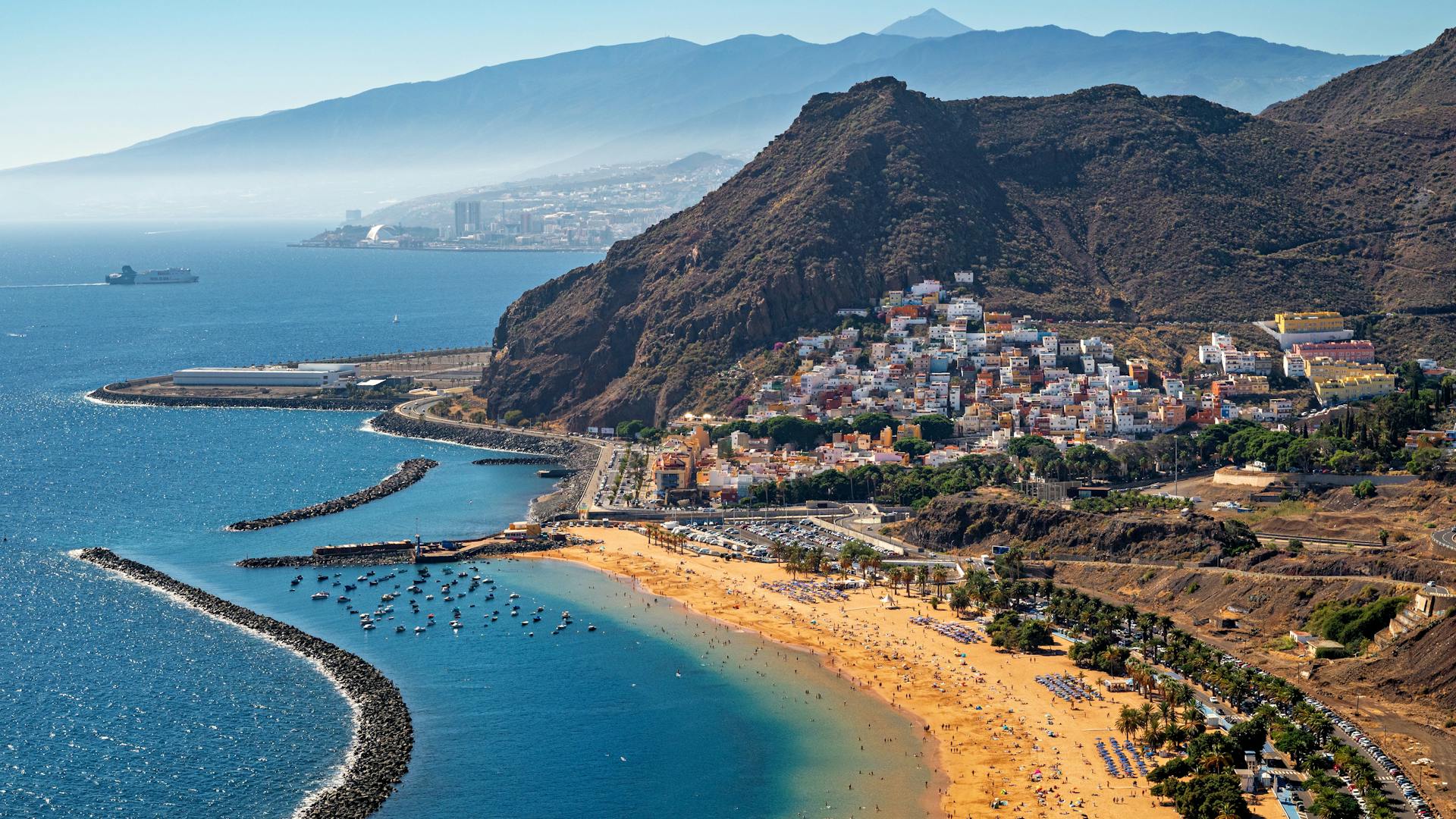
Although Spain is not huge, light differences between north and south are notable. In Barcelona and along the Mediterranean coast, light is crystalline and reflected off the sea, with dominant blue tones. In Madrid, being inland, light is drier and more golden, with especially spectacular sunsets due to suspended dust.
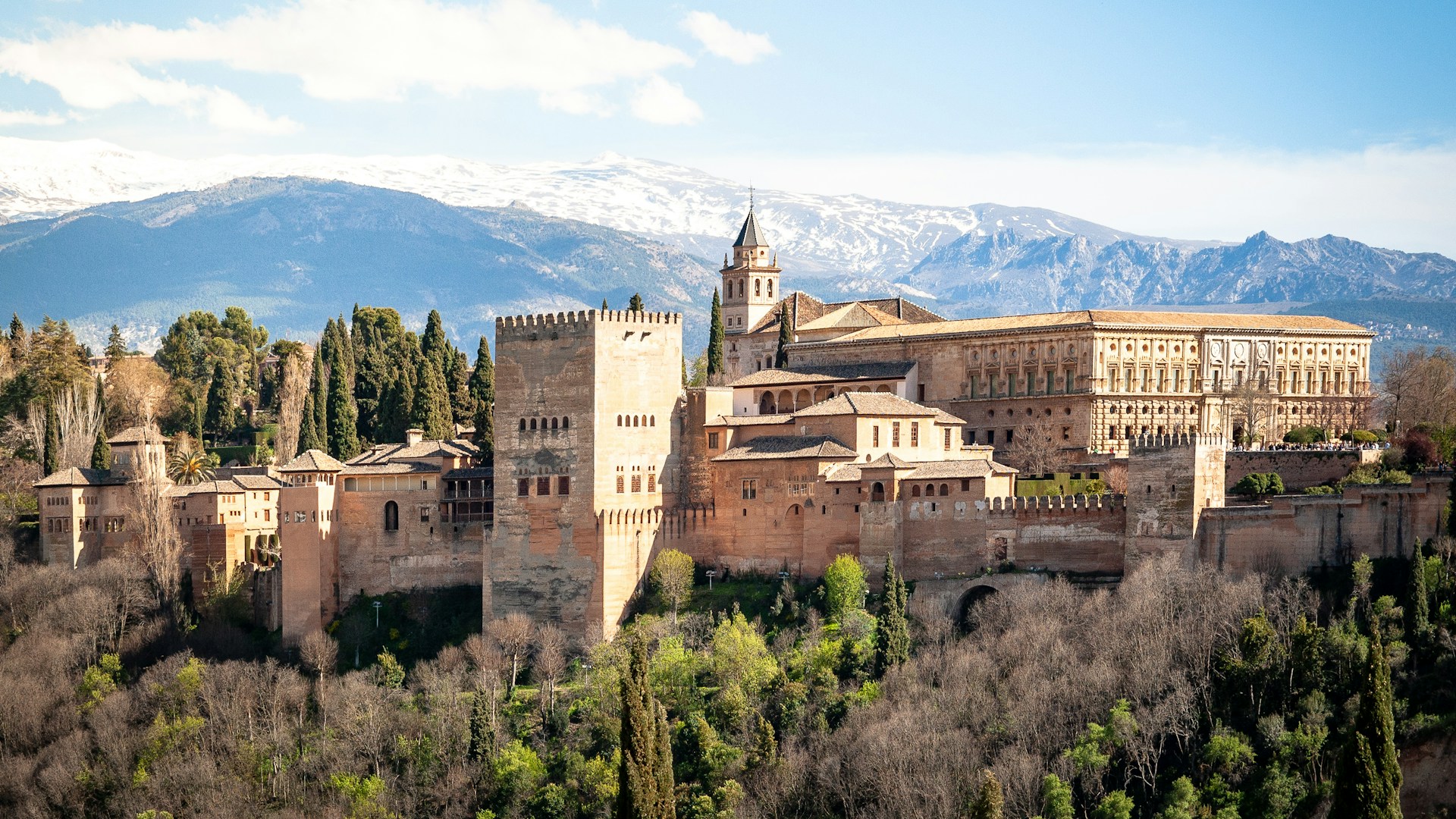
Andalusia (Seville, Granada, Málaga) has the warmest light in the country. October sunsets in Seville, seen from Plaza de España or the Guadalquivir river, are unforgettable. The white lime walls of Andalusian white villages act as a giant natural reflector.
In the north (Bilbao, San Sebastián, Santander), the sky is often partly cloudy. This may sound like a problem but it is actually a blessing: clouds act as a giant natural softbox, giving even light perfect for portraits. Take advantage of the gray days.
In the Canary and Balearic Islands, light changes fast near the sea. In Ibiza and Mallorca, September sunsets have an almost tropical quality, with intense pink skies and golden reflections on the water.
When to avoid outdoor shoots
Between 12:00 and 16:00 in summer, the sun is too high. If that is your only available window, book a studio or use heavily shaded areas (old-town alleys, arcades, open church interiors, cloisters, covered viewpoints). Shade in Spain is your friend.
Fully overcast days also work: clouds act as a giant softbox and light becomes even. The only downside of overcast skies is that the sky in your backgrounds will look flat gray. To avoid it, frame avoiding the sky or compose with tall urban backgrounds.
Days with strong wind (over 30 km/h) make it very hard to work outdoors with long dresses, flowing fabrics, or wedding veils. In areas like Tarifa or Atlantic coasts, check the wind forecast before confirming the session.
Booking at the right time: our process
When you book with us, we automatically suggest the best time slot based on the date and city. We calculate exact sunrise and sunset for the specific day, add golden hour, and subtract 15 minutes so you arrive with margin. Confirm and done.
If you want full control, arrive at the location 15 minutes before golden hour starts to use every minute of good light. Have your entire first outfit ready so you do not lose time changing during the best light.
For weddings or events where you cannot pick the time, we schedule formal portraits during good light and leave non-portrait moments (cocktail, dancing, speeches) for when the sun is high. Good coordination with the wedding planner solves almost every lighting problem.
Useful apps to plan light
Sun Surveyor and PhotoPills are the two apps every professional photographer in Spain uses. They show you exactly where the sun will be at any location and time, with augmented reality visualization. Ideal for planning weddings at venues you do not know in advance.
For fine-grained weather forecasts, AEMET (the official Spanish agency) is more accurate than international apps for Spain. Specifically check the hour-by-hour forecast on the day of your session: cloud cover, wind, rain. If borderline, have a plan B with a covered location.